
 By Nicholas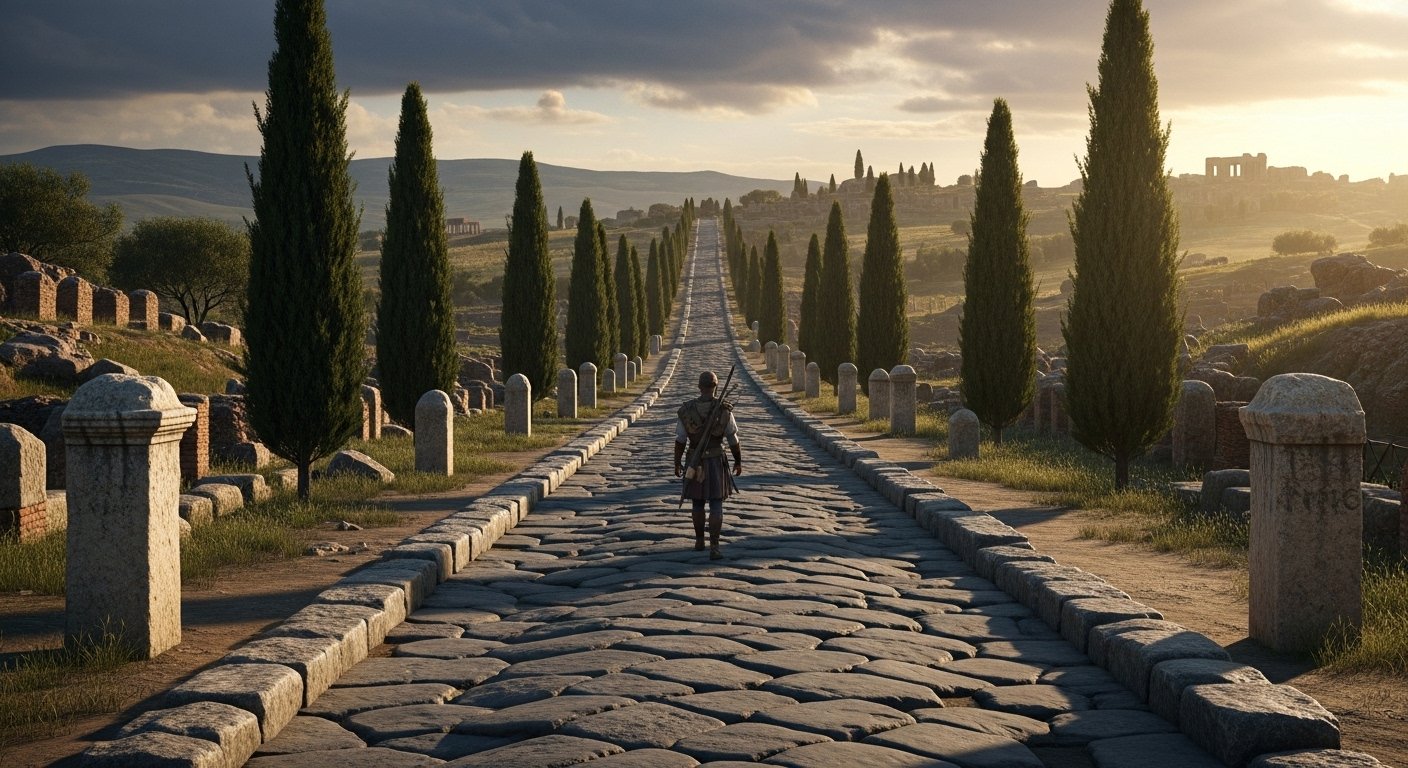
Quick answer: The Cesta Roman refers to the traditional Roman infrastructural and architectural design of engineered pathways and structural corridors. Characterized by deep foundational layering, durable basalt surface paving, and precise drainage systems, the Cesta Roman allowed for rapid military movement and robust trade routes, heavily influencing modern urban planning and landscape architecture.
The study of ancient infrastructure often leads directly to the engineering marvels of the Roman Empire. The Cesta Roman represents one of the most durable and culturally significant architectural achievements in human history. These structural pathways did much more than connect distant territories. They facilitated the spread of language, commerce, and culture across multiple continents.
Understanding the Cesta Roman requires looking beyond simple paving stones. Roman engineers utilized advanced surveying techniques and innovative materials like volcanic ash concrete (opus caementicium) to create structures that have survived for millennia. The Cesta Roman established a baseline for civil engineering that remained unmatched until the industrial revolution.
Modern architects, civil engineers, and urban planners continue to reference the Cesta Roman when designing durable, sustainable infrastructure. This article explores the history, design characteristics, cultural significance, and modern applications of the Cesta Roman, providing a comprehensive overview for architecture professionals and history enthusiasts alike.
What is the history and origin of the Cesta Roman?
The Cesta Roman originated in the 4th century BC as a strategic military requirement for the expanding Roman Republic. The earliest and most famous example, the Appian Way (Via Appia), was constructed in 312 BC by the censor Appius Claudius Caecus. Roman leaders recognized that maintaining control over newly conquered territories required rapid troop deployment, which natural dirt paths could not support during adverse weather conditions.
Roman surveyors, known as mensores, used a specialized instrument called a groma to plot exceptionally straight lines across challenging terrain. This dedication to linearity minimized travel time and demonstrated Rome’s dominance over the natural landscape. The initial construction of the Cesta Roman prioritized military efficiency, but these routes quickly evolved into essential economic arteries.
By the height of the Roman Empire in the 2nd century AD, the Cesta Roman network spanned over 400,000 kilometers, with 80,000 kilometers of stone-paved highways. This massive network connected the capital city to the furthest reaches of the empire, from the rainy hills of Britannia to the arid deserts of North Africa. The construction of the Cesta Roman was typically funded by the state and executed by the Roman military, utilizing legionaries who possessed advanced engineering skills.
How did the Cesta Roman expand across the empire?
The expansion of the Cesta Roman mirrored the territorial growth of the Roman Empire itself. As legions secured new provinces, engineers immediately began laying down foundational trenches. This rapid expansion served a dual purpose: it solidified military control and integrated the new province into the Roman economic system. Local populations were often employed or forced to assist in the construction, which introduced them to Roman architectural standards and accelerated the process of Romanization.
What are the key characteristics and design elements of the Cesta Roman?
The Cesta Roman is defined by its meticulous, multi-layered construction and precise environmental engineering. Roman engineers utilized a standardized structural system that provided exceptional durability and facilitated natural water drainage. This layered approach ensured that the Cesta Roman could support heavy, continuous traffic without sinking or eroding over time.
The typical construction of the Cesta Roman involved excavating a deep trench, known as the fossa, which was then filled with specific layers of materials. This method created a solid foundation that prevented the surface from shifting during freeze-thaw cycles or heavy rainfall. The exact materials varied based on local availability, but the structural philosophy remained consistent across the empire.
What are the four structural layers of the Cesta Roman?
The Cesta Roman traditionally features four distinct structural layers, known as the statumen, rudus, nucleus, and summum dorsum.
- The statumen formed the foundational layer, consisting of large, rough stones placed tightly together at the bottom of the excavated trench.
- The rudus was a binding layer made of crushed stones, gravel, and lime mortar, providing flexibility and strength.
- The nucleus served as the fine leveling layer, composed of cement and smaller gravel or sand.
- The summum dorsum was the visible surface layer, typically paved with large, flat, tightly fitted polygonal blocks of basalt or limestone.
How did Roman engineers manage water and drainage?
Water management was a critical design element of the Cesta Roman. Engineers constructed the surface layer with a distinct crown, or agger, which sloped downward from the center to the edges. This camber allowed rainwater to run off the surface immediately, preventing pooling and subsequent erosion.
Parallel drainage ditches, called fossae, were dug along both sides of the Cesta Roman. These ditches collected the runoff water and channeled it away from the foundation. In areas with high water tables or frequent flooding, Roman engineers elevated the Cesta Roman on raised embankments or constructed arched stone culverts to allow water to pass harmlessly underneath the structure.
Why is the Cesta Roman significant in architecture and culture?
The Cesta Roman is significant because it fundamentally transformed the economic, social, and cultural landscape of the ancient world. Architecturally, the Cesta Roman proved that standardized engineering principles could be applied successfully across vastly different geographical environments. Culturally, these structures acted as the physical internet of antiquity, facilitating the rapid exchange of ideas, art, religion, and commerce.
The existence of the Cesta Roman enabled the concept of a unified European and Mediterranean economy. Merchants could transport delicate goods, such as glass and pottery, over long distances with minimal breakage. Agricultural products from rural provinces could reach urban centers reliably, supporting massive population growth in cities like Rome, Alexandria, and Antioch.
How did the Cesta Roman influence cultural exchange?
The Cesta Roman drove cultural exchange by making travel accessible and relatively safe for civilians, scholars, and religious figures. The spread of early Christianity, for example, relied heavily on the Cesta Roman network, allowing figures like Paul the Apostle to travel extensively and establish communities across the empire. The presence of Roman roads also standardized legal and administrative practices, as magistrates and officials could travel predictably to enforce Roman law.
What was the psychological impact of Roman infrastructure?
The psychological impact of the Cesta Roman on conquered populations was profound. The sight of a perfectly straight, stone-paved structure cutting through untamed wilderness served as a constant, physical reminder of Rome’s power and permanence. The Cesta Roman communicated an implicit message of order, control, and technological superiority, effectively discouraging rebellion and encouraging assimilation into the Roman way of life.
How is the Cesta Roman used in modern applications and interpretations?
Modern applications of the Cesta Roman focus on sustainable infrastructure, historical preservation, and landscape architecture. Contemporary civil engineers study the Cesta Roman to understand how structures can survive for millennia with minimal maintenance. The layered construction technique pioneered by the Romans remains the foundational principle for modern highway and railway construction.
In landscape architecture, the aesthetic and functional principles of the Cesta Roman are frequently adapted for pedestrian walkways, park trails, and urban plazas. Designers utilize the polygonal paving patterns and natural drainage slopes to create visually striking, environmentally resilient public spaces. Choose Cesta Roman design principles if long-term durability matters more than short-term construction costs.
How do modern engineers adapt Cesta Roman principles?
Modern engineers adapt Cesta Roman principles by combining ancient layering techniques with modern materials. While contemporary roads use asphalt or synthetic concrete for the surface layer, the underlying foundation still relies on a graded aggregate base that mirrors the statumen and rudus. Furthermore, the Roman emphasis on rigorous site surveying, soil stabilization, and comprehensive water drainage remains central to modern civil engineering best practices.
What is the role of the Cesta Roman in sustainable design?
The Cesta Roman plays a vital role in sustainable design due to its reliance on local, natural materials and its harmonious integration with the surrounding hydrology. Modern urban planners use permeable paving systems inspired by the Cesta Roman to reduce urban runoff and replenish groundwater. By studying how Roman infrastructure interacted with the environment without degrading it, contemporary architects can design civic projects that are both ecologically responsible and highly durable.
Integrating Cesta Roman Principles Today
The legacy of the Cesta Roman extends far beyond the ruins that still cross the European landscape. The structural discipline, environmental awareness, and standardized methodologies developed by Roman engineers continue to inform how we build our world today. Integrating Cesta Roman principles into modern projects requires a commitment to deep foundational planning and proactive water management.
For urban planners and civil engineers, the Cesta Roman serves as a masterclass in longevity. By prioritizing structural integrity over rapid completion, modern projects can achieve a lifespan that reduces long-term resource consumption and maintenance costs. The Cesta Roman proves that infrastructure is not merely a utilitarian necessity; it is a profound cultural statement that shapes human interaction for generations.
Frequently Asked Questions About Cesta Roman
What exactly does the term Cesta Roman mean?
The Cesta Roman refers to the standardized architectural and engineering system used by the ancient Romans to construct their vast network of durable, paved pathways and infrastructural corridors. The term encompasses the specific multi-layered construction techniques, materials, and drainage systems that defined Roman civic engineering.
How long did a typical Cesta Roman take to build?
The construction timeline for a Cesta Roman varied significantly based on the terrain, local material availability, and military urgency. A well-supplied Roman legion could construct several kilometers of the Cesta Roman in a single month under favorable conditions. Complex segments requiring bridges, tunnels, or extensive marshland embankments could take years to complete.
Why have some Cesta Roman structures survived for over 2,000 years?
Cesta Roman structures have survived for millennia due to their deep, stabilized foundations, precise water drainage systems, and the use of highly durable materials like volcanic ash concrete and basalt paving stones. Furthermore, the cambered surface prevented water pooling, which is the primary cause of erosion and structural failure in paved infrastructure.
Can Cesta Roman design principles be used for modern residential driveways?
Yes, Cesta Roman design principles can be highly effective for modern residential driveways. Homeowners can replicate the multi-layered foundation and crowned surface drainage to create a driveway that resists sinking and cracking. Choose a Cesta Roman-inspired permeable paver system if environmental sustainability and water management matter more than the low initial cost of poured asphalt.
What was the most difficult terrain the Romans built the Cesta Roman across?
The Romans successfully built the Cesta Roman across some of the most challenging terrain in Europe and the Middle East, including the steep alpine passes of Switzerland, the deep marshlands of the Pontine region, and the arid deserts of Syria. In mountainous regions, engineers carved the Cesta Roman directly into sheer rock faces and constructed massive retaining walls to support the pathway.